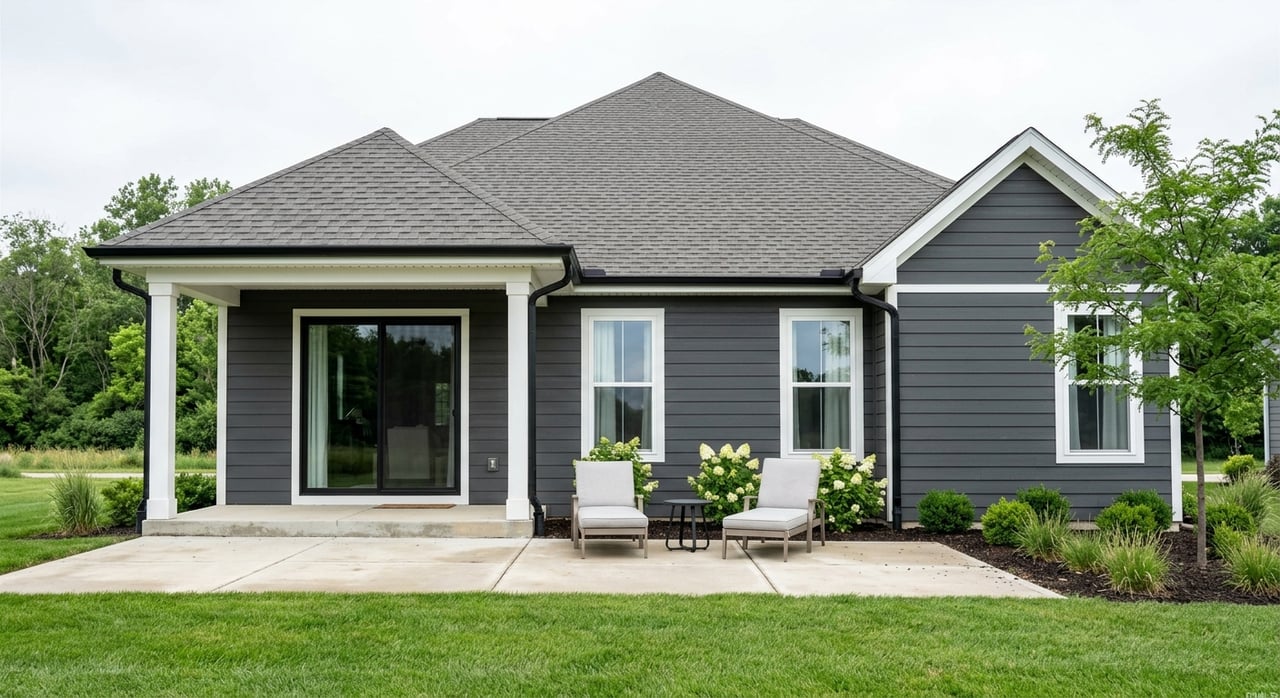
If you are looking for a rental property market that may offer steadier long-term demand than flashier short-term plays, Norwalk deserves a closer look. This growing suburb south of Des Moines has a rising population, limited rental supply, and a housing mix that still leans heavily toward owner-occupied single-family homes. For investors, that combination can create opportunity if you buy the right product and underwrite it with local rules in mind. Let’s dive in.
Why Norwalk stands out
Norwalk is not a large city, but it is growing quickly. According to U.S. Census QuickFacts, the population reached 15,396 in 2024, which was up 20.3% from 2020. That kind of growth matters because it often brings more housing demand, especially in communities with easy access to the broader metro.
The city’s 2042 Comprehensive Plan ties that growth to Norwalk’s proximity to the Des Moines area, along with access to services, higher education, commerce, and innovation. The same plan notes that more than half of developed land is low-density residential, while medium- and high-density housing together make up less than 5% of existing land uses. For investors, that suggests a market where rental options may stay relatively limited compared with demand.
What tenant demand looks like
Norwalk’s renter base appears to be driven largely by commuters and households looking for longer-term stability. Census data shows a 21.6-minute average commute, 71.5% labor-force participation, and 83.8% of residents living in the same house one year earlier. That points to a community where people are often looking for practical, well-located housing rather than highly transient options.
Current renter data also helps paint the picture. Point2Homes reports renter households averaging 2.17 people, with the largest renter age groups in the 25 to 34 and 35 to 44 ranges. It also reports that 34% of renter households are family households and 28% include related children under 18.
Another factor worth noting is the local school district boundary. The Norwalk Community School District says it serves about 3,500 students, and the district states that it is closed to open enrollment. In practical terms, that means some households who want to live within district boundaries may choose renting as a way to access housing in Norwalk.
Rent levels to use carefully
One of the biggest mistakes investors make in smaller markets is relying on a single rent source. In Norwalk, rent estimates vary a lot depending on the platform and the inventory being tracked.
The most conservative occupied-unit benchmark is the $838 median gross rent reported by U.S. Census QuickFacts. That figure reflects occupied units, not just active listings. By contrast, current asking-rent sources run much higher, with Point2Homes reporting average apartment rent of $1,187, Zillow showing average rent of $1,850, and Zumper showing median rent of $1,945.
That spread does not necessarily mean one source is wrong. It usually means each platform is pulling from a different set of listings and time periods. For underwriting, it is smart to treat the ACS figure as a conservative baseline and use active-listing platforms as a check on current market direction.
Best rental property types in Norwalk
If you are trying to match product type with likely demand, Norwalk’s numbers point you in a fairly clear direction. The city’s comprehensive plan says low-density residential makes up 50.8% of developed land and is mainly single-family detached homes. That means the existing housing pattern already supports investors who focus on traditional long-term rentals.
The plan also allows for a broader mix in designated areas, including small-lot single-family homes, two-family homes, townhomes, condos, apartments, mixed-use buildings, and mobile home parks. Even so, the current market setup appears most favorable for long-term rental properties that fit the city’s existing residential pattern.
Based on renter mix and current asking-rent ranges, the strongest fit may be:
- 2-bedroom apartments or townhomes, since Point2Homes shows 296 two-bedroom renter units, the deepest renter segment
- 1-bedroom units for smaller households, though this segment is slightly smaller than 2-bedroom inventory
- 3-bedroom homes, duplexes, and townhomes for households wanting more space
- Single-family detached homes that align with the city’s dominant land-use pattern
Current listings reported by Point2Homes cluster around these rent ranges:
- About $1,000 for 1-bedroom apartments
- Roughly $1,150 to $1,200 for 2-bedroom apartments
- Around $1,350 to $1,525 for 3-bedroom apartments
- About $2,100 to $2,400 for houses and larger units
For many investors, that makes 2- to 3-bedroom long-term rentals the most natural place to start.
Vacancy appears tight
Supply conditions matter just as much as rent levels. Here, Norwalk looks fairly constrained.
Point2Homes estimates rental vacancy at 1.8%, which is low. The same source also points to a relatively limited pool of available units, and the research report notes Zillow showing 21 active rentals and Zumper showing 12.
In a market this size, low vacancy can support steadier leasing conditions. It can also make quality, well-maintained rentals stand out faster, especially if they offer practical layouts, functional finishes, and easy commuting access.
Why long-term rentals make more sense
If your investment plan centers on short-term rentals, Norwalk is likely not the easiest fit. The city’s rental housing code says short-term rentals of 31 days or less are only allowed when the unit is owner-occupied and the owner is on site and present for the duration.
That rule changes the opportunity set right away. For most investors, Norwalk is better viewed as a long-term rental market, not a vacation-rental or absentee-host market. The local data supports that approach anyway, since the strongest demand signals come from commuters, longer-term households, and renters seeking practical housing within city limits.
Local rules investors should know
Before you buy, it is important to budget for compliance and ongoing property management responsibilities. Norwalk requires rental certificates and regular inspections every 24 months. The city code also says the certificate is not transferable on sale, so a new owner should plan for that step after acquisition.
The code says the city provides 24 hours’ notice before an interior inspection, and it also prohibits retaliation against tenants who make complaints. These are not unusual rules, but they do matter for timelines, turnover planning, and operating procedures.
State law also affects your underwriting. Under Iowa landlord-tenant law:
- Security deposits cannot exceed two months’ rent
- The deposit or an itemized statement must be returned within 30 days after tenancy ends and after receipt of the tenant’s mailing instructions
- Month-to-month tenancies may be terminated with 30 days’ written notice
None of these rules are deal-breakers, but all of them should be part of your operating assumptions.
A simple Norwalk underwriting checklist
When you evaluate a rental property in Norwalk, keep your underwriting grounded in the local market rather than broad statewide assumptions.
Use this checklist as a starting point:
- Confirm the property type fits long-term rental demand
- Compare your projected rent against both the conservative ACS baseline and current asking-rent ranges
- Check whether the layout suits the stronger local segments, especially 2-bedroom and 3-bedroom units
- Verify compliance needs for rental certificates and inspection timing
- Factor in a market with tight vacancy, but do not assume every property will command top-of-market pricing
- Review whether the property condition supports quick leasing without major deferred maintenance
- Underwrite with Iowa rules for deposits, notices, and move-out accounting
For investors who also plan improvements, durable and widely appealing finishes may make the most sense in this market. Practical updates like clean flooring, fresh paint, functional kitchens, and low-maintenance exteriors often align better with long-term hold performance than highly customized upgrades.
What this means for investors
Norwalk appears strongest for investors who want stable, long-term rental housing in a growing suburban setting. Population growth, a commuter-friendly location, and a housing stock still dominated by low-density residential all support that case. At the same time, local rules and the short-term rental limits push the market away from speculative vacation-rental strategies.
If you are looking at Norwalk, the clearest opportunities may be properties that serve everyday renters well: detached homes, duplexes, townhomes, and other 2- to 3-bedroom rentals that fit how people already live in the area. In a market like this, the best investments are often the ones that feel the most usable, durable, and easy to lease.
If you want a local perspective on how a property’s condition, layout, and upgrade potential may affect its rental performance or resale value, Tim & Miranda Lucken can help you think through the numbers and the real-world tradeoffs before you make your move.
FAQs
What makes Norwalk, Iowa attractive for rental property investors?
- Norwalk offers population growth, low reported rental vacancy, proximity to the Des Moines metro, and a housing supply that still leans heavily toward low-density residential, which can support long-term rental demand.
What rental property types fit Norwalk tenant demand best?
- Based on the city’s housing mix and renter data, 2-bedroom and 3-bedroom rentals, including detached homes, townhomes, and duplex-style options, appear to align best with likely tenant demand.
Are short-term rentals allowed in Norwalk, Iowa?
- Short-term rentals of 31 days or less are only allowed if the unit is owner-occupied and the owner is on site and present for the duration, which makes Norwalk a stronger fit for long-term rental strategies.
What rent benchmarks should investors use in Norwalk?
- A conservative starting point is the ACS median gross rent of $838, while current asking-rent sources suggest higher market rents depending on unit type, with active listings useful as a market check rather than a sole underwriting basis.
Does Norwalk require rental inspections or permits?
- Yes. Norwalk requires rental certificates and regular inspections every 24 months, and the certificate is not transferable when a property is sold.
What Iowa landlord-tenant rules matter for Norwalk investors?
- Iowa law limits security deposits to two months’ rent, requires return of the deposit or an itemized statement within 30 days after tenancy ends and tenant mailing instructions are received, and allows month-to-month tenancy termination with 30 days’ written notice.