Wondering where Des Moines keeps its older homes with real curb appeal and a sense of history? If you are drawn to front porches, mature trees, brick exteriors, and blocks that feel established, you are not alone. Des Moines has several pockets where older charm still stands out, and knowing what to look for can help you narrow your search faster. Let’s dive in.
Why Des Moines Has So Many Character Homes
Des Moines grew in major waves from the late 1800s through World War II, and that growth closely followed streetcar lines and affordable building lots. That pattern helped house types like bungalows and square houses spread beyond the city core into multiple neighborhoods.
That matters when you are house hunting today. Older charm in Des Moines is not limited to one historic district or one side of town. Instead, you will find character homes across several city-recognized neighborhoods, each with its own mix of age, lot layout, and architectural style.
Where To Find Older Charm
Sherman Hill
Sherman Hill is one of Des Moines’s oldest neighborhoods and the city’s first local historic district. Its housing stock includes late-19th-century Victorian styles such as Queen Anne, Italianate, and Eastlake, along with smaller cottages and later early-20th-century homes.
If you want a neighborhood with strong architectural variety near downtown, this is a smart place to start. The streetscape reflects multiple eras of development, which gives the area a layered, historic feel.
River Bend
River Bend sits just north of downtown and has deep historic fabric. City district materials describe six districts and 27 individually listed National Register properties there, with architecture dating back to the 1870s.
For buyers who want an older-home area close to the city center, River Bend offers a wide range of vintage housing context. It is a good option if you enjoy blocks where the historic pattern is visible from one street to the next.
North of Grand
North of Grand is known as a historic district with tree-lined streets and an eclectic mix of architectural styles. If your idea of charm includes visual variety and established streetscapes, this area deserves a closer look.
When you tour homes here, pay attention to the relationship between the houses and the block as a whole. In older districts, the setting often adds as much value to the experience as the house itself.
Woodland Heights
Woodland Heights says surviving historic homes in the neighborhood date back to 1875. The area developed as a bedroom community, and that long history still shows in its older housing stock.
This can be a strong fit if you are looking for homes with early roots and a distinct period feel. As with many older Des Moines neighborhoods, the charm often comes from the combined effect of lot pattern, mature trees, porches, and consistent setbacks.
Westwood
Westwood’s neighborhood association describes the area as home to some of the oldest, most historic homes in Des Moines. That alone puts it on the map for buyers searching for older charm.
If your search is focused on age and architectural presence, Westwood is worth adding to your list. The neighborhood can appeal to buyers who want a home that feels tied to Des Moines’s earlier residential history.
Waveland Park
Waveland Park is known for its unique architecture and neighborhood identity. While not every older neighborhood looks the same, this area stands out for its established character and recognizable visual style.
When you drive through, look at how consistently the homes relate to one another. That sense of identity often signals a neighborhood where original form and historic streetscape remain visible.
Beaverdale
Beaverdale is probably Des Moines’s best-known brick-home neighborhood. Most of its subdivisions were developed between 1920 and 1940, and the area is especially associated with the locally termed Beaverdale Brick, a Tudor Revival-influenced house type.
For many buyers, this is the classic Des Moines character-home search area. The neighborhood’s grid street pattern, along with some later curving drives in Maryland Park and Ashby Manor, gives it both structure and variety.
Other North-Side Pockets
Nearby north-side districts such as Chautauqua Park are also associated with Beaverdale Brick homes. If you like the look of masonry, story-and-a-half forms, and Tudor Revival influence, it can be worth exploring beyond the best-known streets.
This is especially helpful if you want older charm but also want to compare different blocks, lot layouts, and levels of preservation. Sometimes the best fit is in a nearby pocket rather than the first neighborhood on your list.
What Des Moines Character Homes Often Look Like
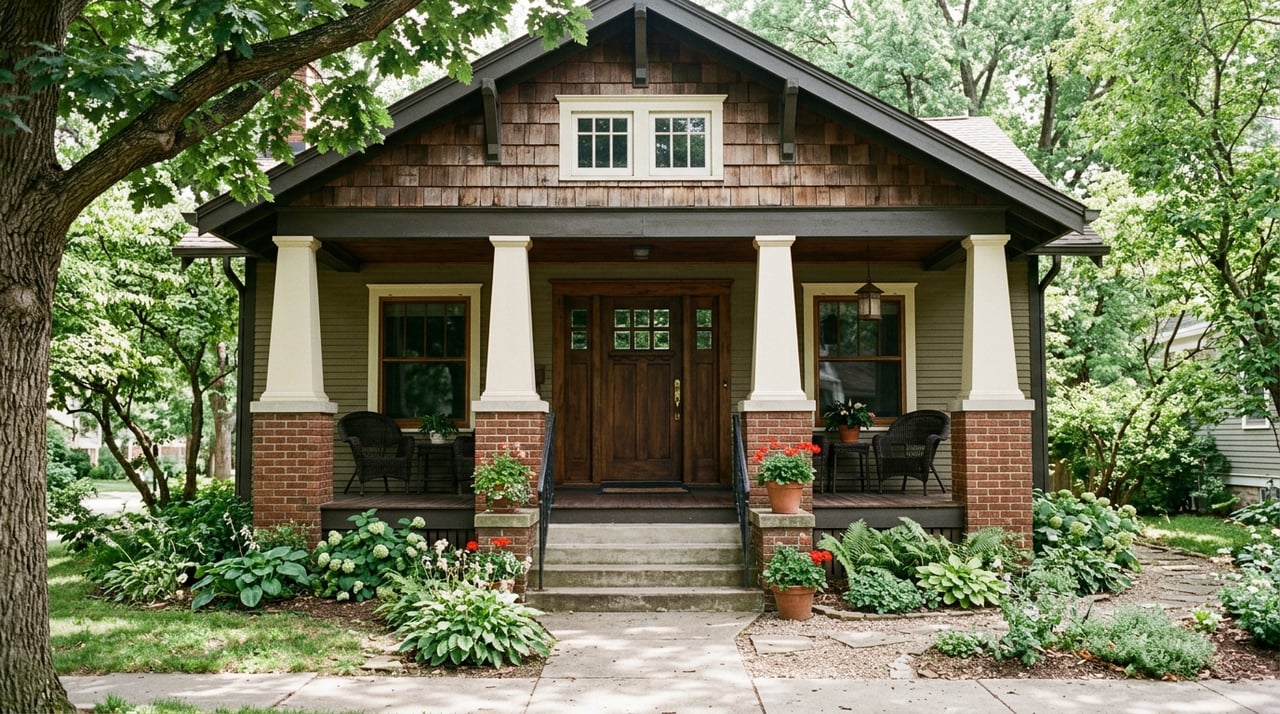
Many older Des Moines homes reflect bungalow and cottage traditions. Bungalows are typically one to one-and-a-half stories with low-pitched roofs, broad front porches, overhanging eaves, and compact, informal floor plans.
In Des Moines, buyers also tend to notice strong porch presence, masonry, and horizontal massing. These features create the visual warmth that makes an older home feel inviting before you even step inside.
Smaller cottages and story-and-a-half homes are also common in older districts. Some of these neighborhoods were laid out on narrow or compact lots, so you may see groups of homes with repeating forms and tightly organized street grids.
How To Spot a Great Block First
When you are browsing older homes, start with the block before the house. In Des Moines, the street-level clues often tell you a lot about whether a neighborhood still reads as a cohesive historic area.
Look for details like:
- Consistent setbacks from house to house
- Mature tree canopy
- Alleys behind homes
- Repeated porch shapes and rooflines
- Similar lot rhythm across the street
These are not formal rules, but they are useful clues tied to Des Moines’s streetcar-era development pattern. They often signal a period-built block rather than a street heavily altered by later infill.
What To Check On the House Itself
Once a block catches your eye, focus on the exterior features that most strongly shape character. In older homes, the big picture matters more than cosmetic finishes.
A quick field checklist can help:
- Check whether the front porch still defines the front of the house
- Look at window proportions and whether they appear original or compatible with the home’s style
- Notice roof shape and massing rather than just surface updates
- Compare siding, masonry, or wood details with neighboring homes
- Look at how much visible alteration has changed the original design
In practical terms, intact porches, compatible window work, and appropriate masonry or wood repairs often matter more than trendy finishes. That is especially true if you care about preserving the home’s original feel.
Historic District Rules To Know
If a home is inside one of Des Moines’s historic districts, exterior construction or alteration generally requires a certificate of appropriateness before a permit is issued. City code also gives the historic preservation process authority over district review.
That review can affect remodeling, new construction, and in some cases even work involving alleys, streets, and sidewalks. If you are considering changes to the exterior, it is important to understand district requirements early.
Demolition can also trigger added review. Des Moines code and council materials show that older single-family buildings and historically significant structures may be referred for city review before demolition proceeds.
Renovation Tips for Older Homes
If you buy an older character home, preservation-minded updates usually protect value better than sweeping exterior changes. National preservation guidance emphasizes repair over replacement and encourages keeping character-defining materials and features whenever possible.
For windows, repair is generally treated as the first option. When replacement is necessary, the new work should match the old design, color, texture, and, where possible, materials.
The same preservation guidance allows sensitive upgrades to mechanical, electrical, plumbing, and code-related systems when the work does not damage historic character. That is good news if you want a house that feels old in the right ways and functions well day to day.
What Sellers Should Focus On
If you are selling an older home in Des Moines, visible maintenance history matters. Buyers looking for character usually notice whether the home has kept its original massing and whether repairs to porches, windows, and masonry feel compatible with the house.
That does not mean every home needs a major restoration project. It means thoughtful upkeep and design consistency often help your home connect with buyers more easily than a property where the original character has been heavily obscured.
For sellers, the first step is often identifying which features still carry the home’s charm and which updates may distract from it. That kind of clarity can shape smarter prep decisions before listing.
Possible Tax Credit Considerations
There may be historic preservation incentives available for certain properties, but they are not one-size-fits-all. Iowa’s state historic preservation tax credit can be up to 25 percent of qualified rehabilitation expenses for eligible historic properties.
The federal 20 percent historic rehabilitation credit applies only to certified historic structures used for income-producing purposes. Owner-occupied homes do not qualify for that federal credit.
Because eligibility depends on the property and the project, it is worth confirming details early if incentives are part of your plan.
If you are exploring a character home in Des Moines or preparing one for sale, a careful eye for original features can go a long way. For guidance on how to position an older home, plan smart updates, or get market-ready with less guesswork, connect with Tim & Miranda Lucken.
FAQs
Where can you find older character homes in Des Moines?
- Some of the best-known areas include Sherman Hill, River Bend, Beaverdale, North of Grand, Woodland Heights, Westwood, Waveland Park, and nearby north-side pockets such as Chautauqua Park.
What styles are common in older Des Moines homes?
- Buyers often see bungalows, cottages, story-and-a-half homes, Victorian-era houses, and Beaverdale Brick homes with Tudor Revival influence.
What makes a Des Moines block feel historic?
- Common clues include consistent setbacks, mature trees, alleys, repeating porch and roof forms, and a street layout that reflects an older plat or grid pattern.
What should you check first when touring a character home in Des Moines?
- Start with porch condition, window proportions, roofline continuity, siding or masonry compatibility, and how much the home’s original design has been altered.
What happens if a Des Moines home is in a historic district?
- Exterior construction or alteration generally requires a certificate of appropriateness before a permit is issued, and some additional review may apply for demolition or other changes.
Are there tax credits for historic home work in Iowa?
- Iowa offers a state historic preservation tax credit of up to 25 percent of qualified rehabilitation expenses for eligible historic properties, while the federal credit applies only to certified income-producing historic structures.